Telstra Super
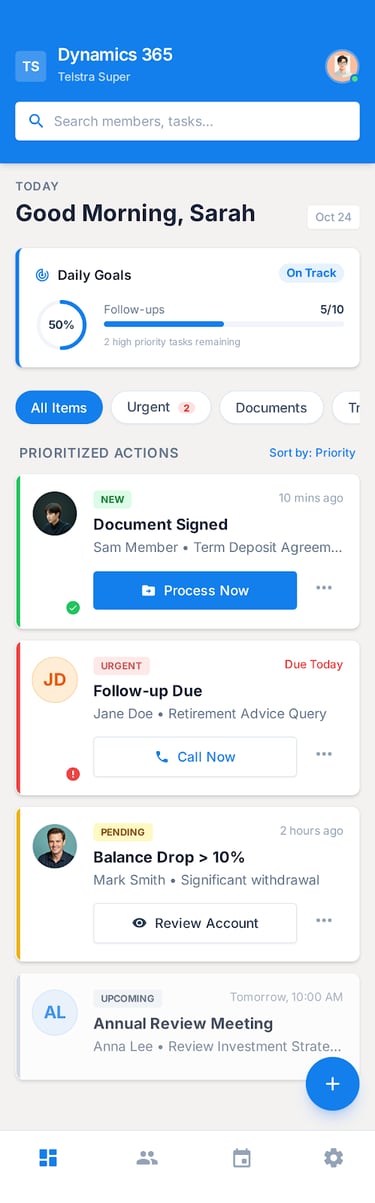
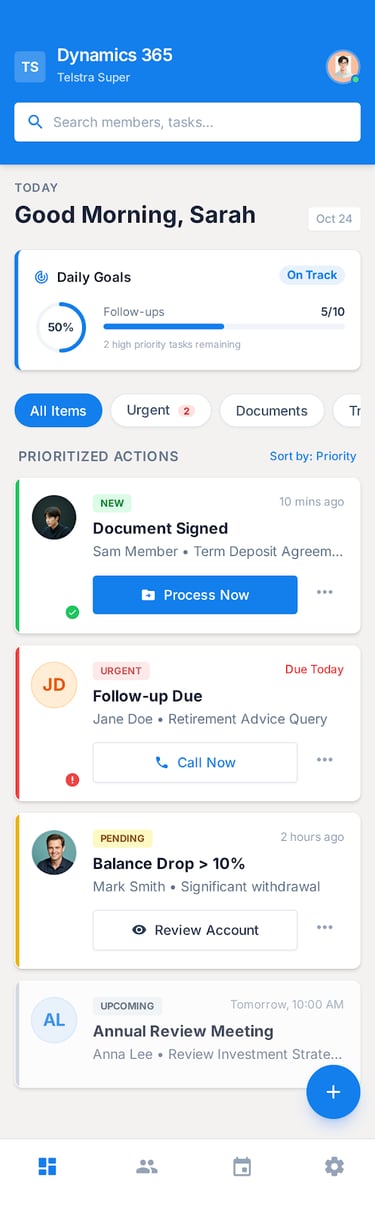
Designed a secure Online Portal & App (SuperOnline): Members can manage their accounts, update details, track balances in real-time, and download statements through a unified online platform.
Kamol
8/8/20193 min read
Brief
Telstra Super is undergoing a major organizational change affecting people, processes, and technology. The initial phase focuses on developing new CRM tools to support a new way of working, with Member Experience (MX) at the center of the exploration..
Objective
The primary objective is to move beyond just gathering CRM requirements to deeply understand the "forces and feelings" within the ecosystem—including customers, partners, and employees—to create a "single source of truth" and foster a culture of people-centric innovation.
Discovery
The discovery phase utilised a "fused" approach of co-design techniques to rapidly deliver insight and buy-in.
Rather than static profiles, the discovery focused on the "world of the subjects":
The Member: Often feels that super is "boring" or "confusing". They are wary of changes, may be suffering from share market losses, and are looking for simplicity and confidence in their investment.
The Employee: Faces "conflicting priorities" and "no integration" between systems. They feel they "have no time" due to manual processes and lack the "good insights" needed to be proactive with members.
Pains
Disconnected Systems: Lack of a "single source of truth" and no transparency across siloed systems.
Manual Effort: Scheduling and recording contact information are "overly manual" and lack automation.
Communication Gaps: Frequent "cold transfers" where members must repeat information.
Proactivity Deficit: A lack of "trigger events" and proactive contact means members often don't hear from the fund after an interaction. must understand the University's faculty structures to find information, which is frustrating and confusing.
Hypothesis
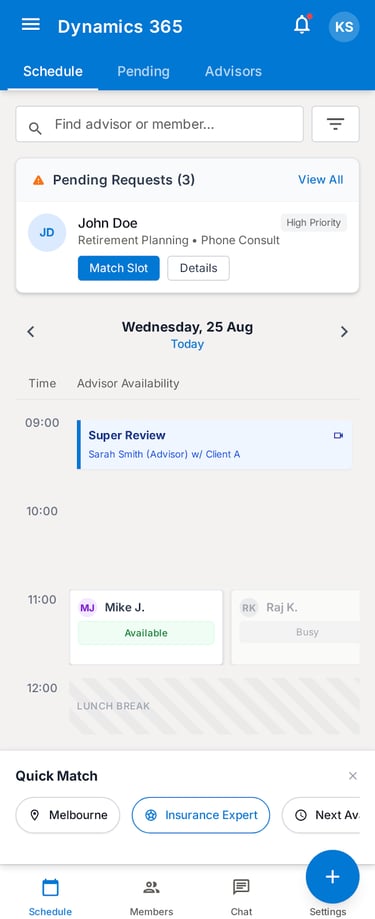
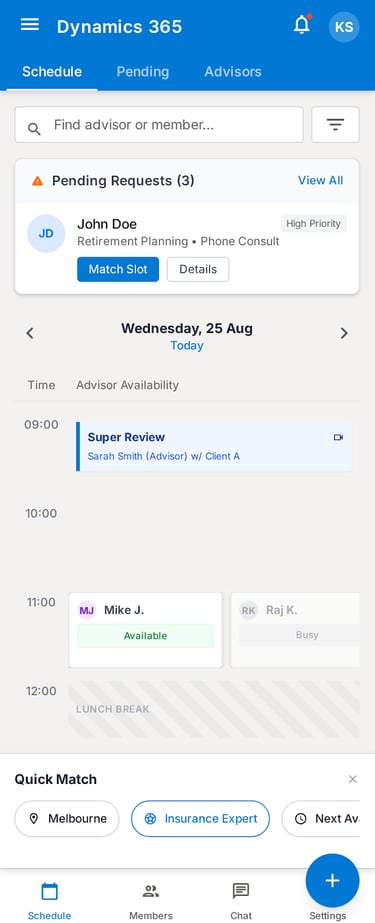
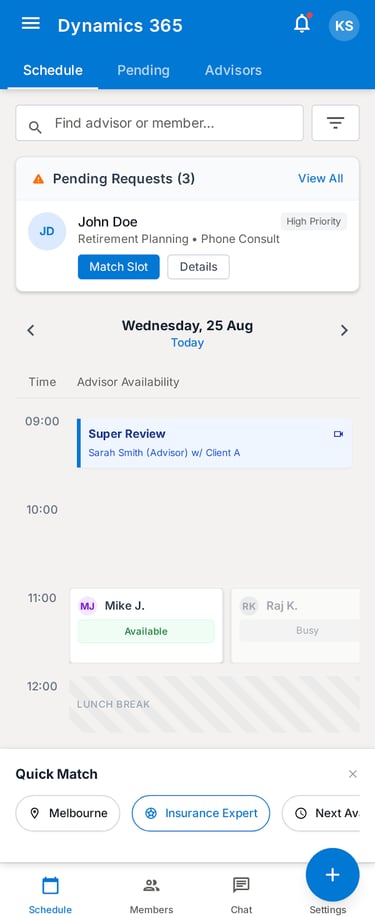
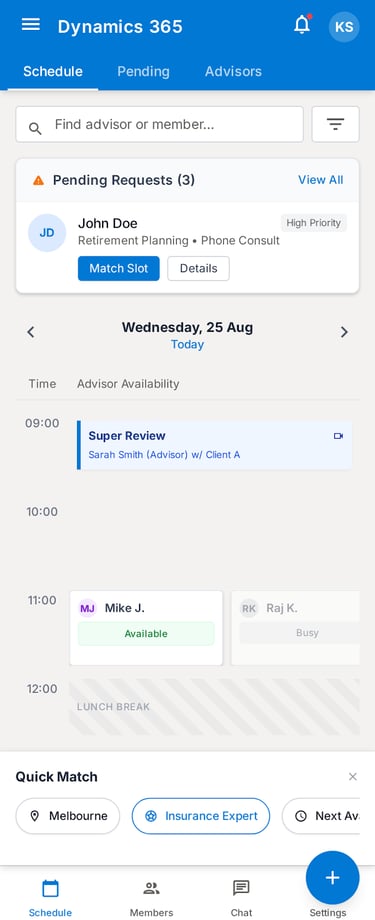
H1 (Scheduling): If we provide an integrated, rule-based calendar, we can reduce manual effort for staff and provide an "easy" booking experience for members.
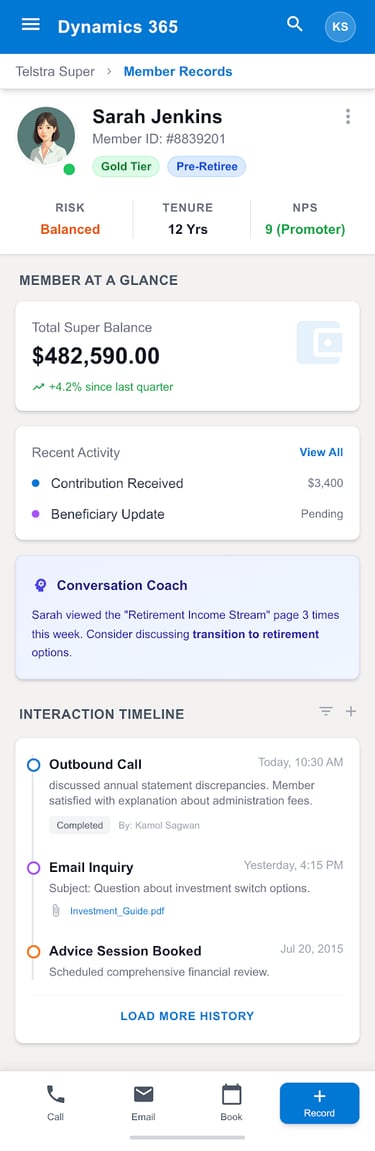
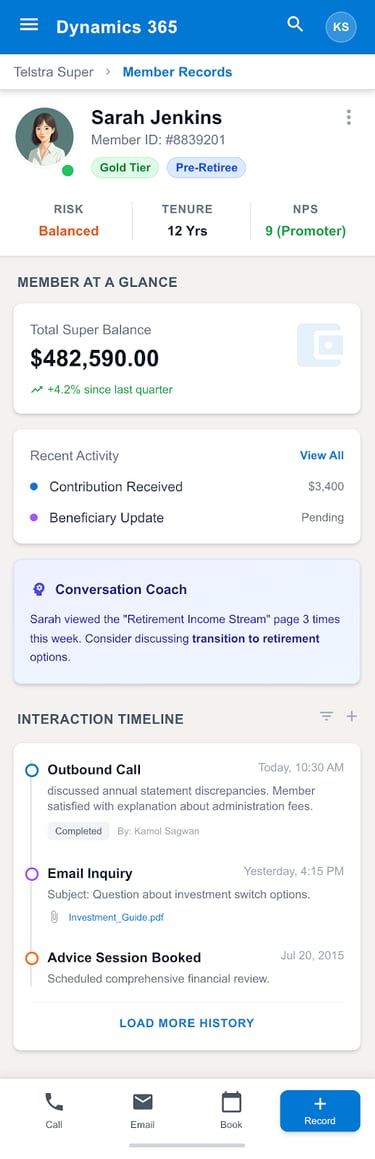
H2 (Member Contact Record / Warm Transfer): Implementing a "Single Customer Record" with automated capture will enable seamless "warm handovers" so members don't have to repeat themselves.
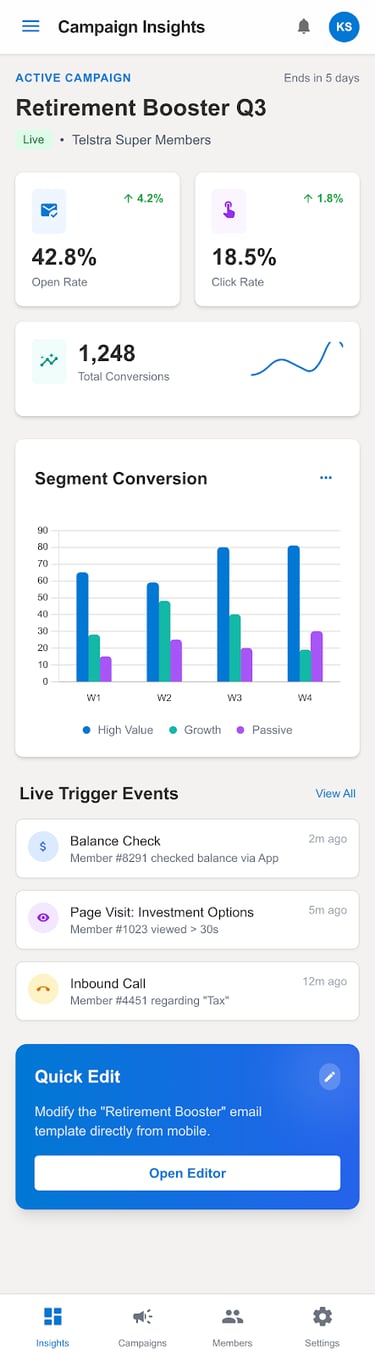
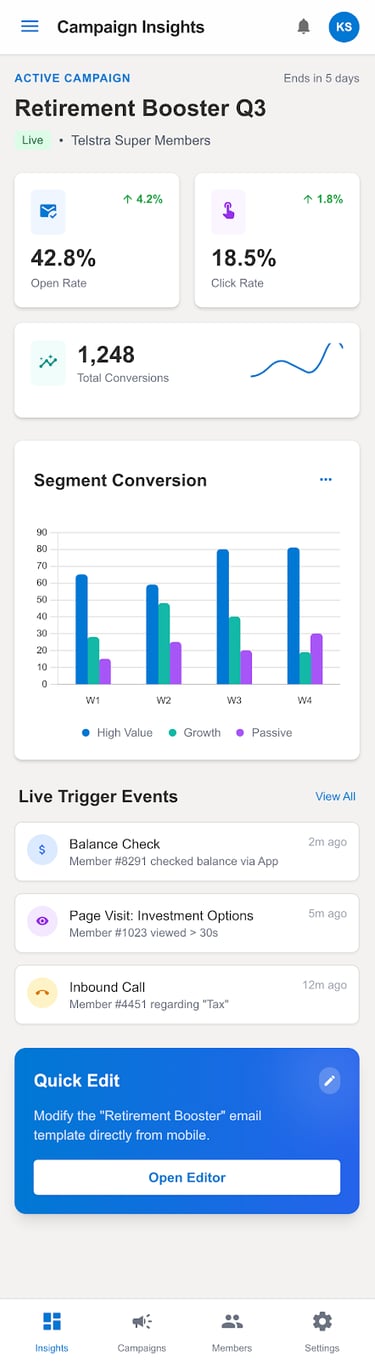
H3 (Campaign Effectiveness): Linking behavioral data and touch-point metrics to a single view will allow campaign managers to assess effectiveness and adapt in real-time.
Journeys
The discovery utilised a high-level Service Journey consisting of seven stages:
Build Awareness: Initial trigger events or awareness.
Develop Prospect: Scoping and initial member contact.
Triage: Determining the level of advice needed.
Book Appointment: The scheduling interaction.
Receive Advice: Face-to-face or digital interaction with an advisor.
Execute on Advice: Implementing the Statement of Advice (SOA).
Strengthen Relationship: Ongoing proactive follow-ups.
Sitemap
The discovery identified core functional components for the CRM
Member View: Integrated calendar for online booking and a history of past contacts.
Staff View: Single Customer Record, Incoming "Pop-up" events, and Quick Lists for recording call types and statuses.
Design Approach
The sprint utilised Lean Program Wireframes and Indicative Layouts:
Scheduling: Filtered lists of available appointment times with "check-off" requirements for staff.
Contact Record: Pop-up member profiles on incoming calls and a timeline-based "History" view of contact events
Test Results
Qualitative: Immersive workshops, "Safari" (observational research), and Empathy Mapping to validate the "Member Voice".
Quantitative: Staff surveys and trend analysis provided the statistical foundation for identified pain points.
Conversion Metrics
Conversion is specifically targeted through the Campaign Effectiveness scenario: Segment Conversion: Measuring the increase in conversion rates by adding segments and marketing lists.
Engagement Tracking: Using touch-point metrics to see how people respond to specific assets and media in real-time.
Success Evidence
The "Collective Ambition" success is defined by:
Member First: Achieving an experience that is "Easy," "Simple," and provides "Confidence".
Empowered Employees: Ensuring staff are "Capable" and have tools that are "Integrated" to remove time-wasting manual tasks.
"Know Me": Measured by the quality and anticipation in interactions, ensuring the member feels known.